

Every analysis of Green Tea is a journey back to purity and balance. The Green Tea Flavor Wheel acts as an emotional map, allowing tea drinkers, tea masters, and researchers to speak a shared sensory language when describing the distinctive character of green tea. It is a professional tool that helps articulate the delicate nuances often too subtle to express in words.
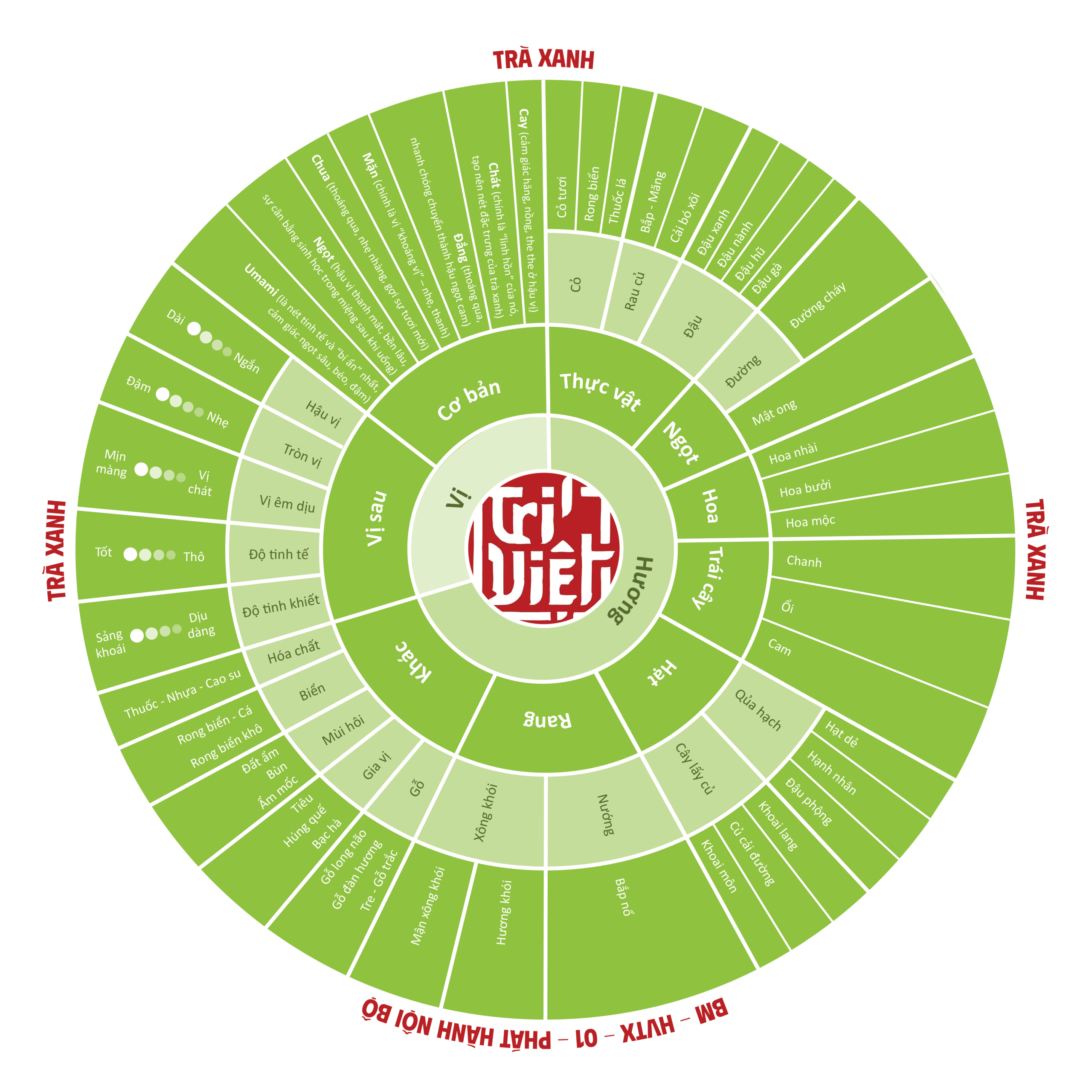
1. The Green Tea Flavor Wheel
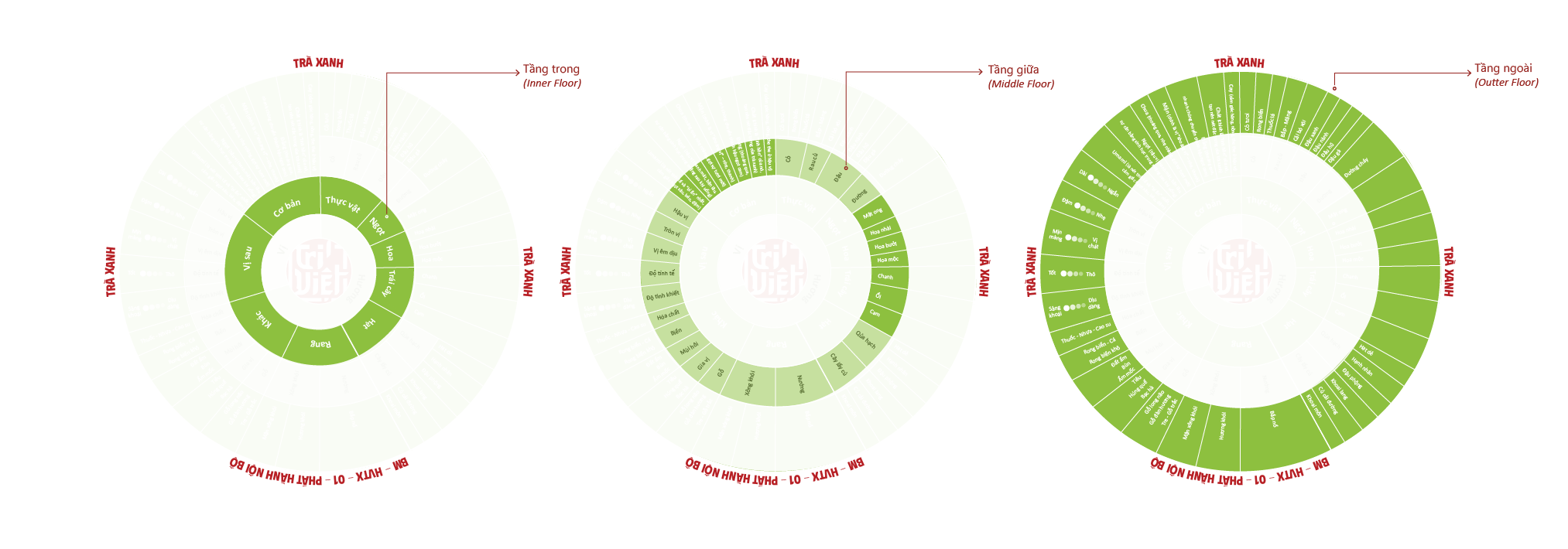
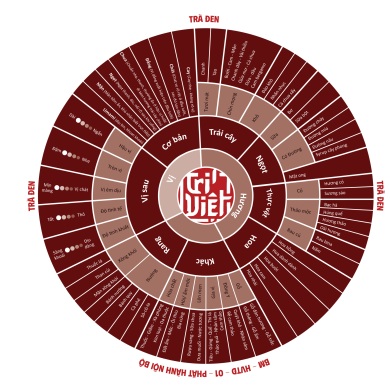
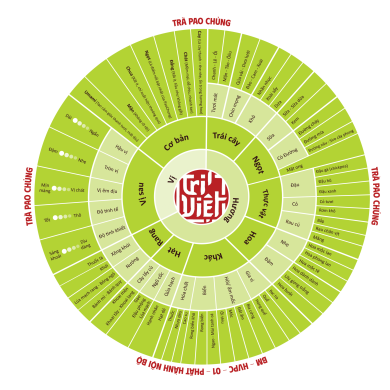
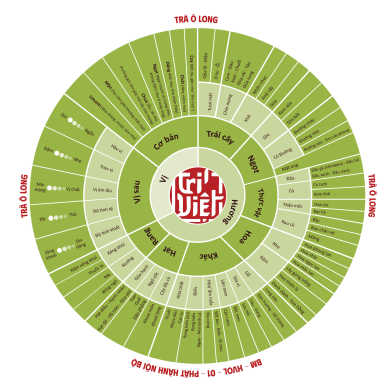
The flavor wheel illustrates the complete sensory spectrum of green tea and its possible expressions. It consists of three layers:
▫️Inner Layer: Main flavor/aroma groups (Vegetal, Sweet, Floral, Fruity, Other, Roasted, Mineral–Marine, Aftertaste).
▫️Middle Layer: Detailed subgroups (Grass, Vegetables, Honey, Jasmine, Citrus, Seaweed, Wood, Smoke…).
▫️Outer Layer: Specific descriptors (guava, green apple, pomelo blossom, chestnut, dried seaweed, baked pastry…).
(Each ring represents a deeper level of precision in sensory description.)
2. Principles for Using the Flavor Wheel
▫️Read from outer to inner layers: Major group → Subgroup → Specific note.
▫️Follow the sensory sequence:
Dry leaves → Warm infusion → Aromas released with hot water → Lingering aftertaste.
▫️Record sensory impressions: astringency, sweetness, minerality, body.
▫️Describe specifically — instead of saying “refreshing,” you might say:
“This green tea carries notes of fresh grass, gentle sweetness, and a long, cooling finish.”
3. Main Aroma Groups in Green Tea
🍃 Vegetal Group – Fresh grass, young greens, steamed beans, seaweed, dried kelp. These aromas define the signature “green” freshness of the tea.
🍃 Sweet Group – Light honey, sugarcane, or subtle nectar sweetness that balances the vegetal tones.
🍃 Floral Group – Jasmine, pomelo blossom, magnolia. The floral notes in green tea are usually soft, delicate, and most vivid when the tea is warm.
🍃 Fruity Group – Citrus, orange, guava, green apple. They lend brightness and liveliness to the profile.
🍃 Other / Roasted–Smoky Group – Hints of wood, chestnut, baked pastry, or gentle smoke. These appear in pan-fired or handcrafted teas, adding depth and personality.
🍃 Mineral–Marine Group – Seaweed, brine, oceanic minerals. This group gives the tea a “savory purity” and natural freshness.
4. Taste and Aftertaste
🔸Primary Taste:
Smooth, mild, and sweet with a light body. Green tea typically leans toward clarity and freshness.
🔸Aftertaste:
Long, clean, and refreshing. A fine green tea leaves behind a lingering sweet note — pure and awakening.
5. Flavor Intensity by Brewing Skill & Tasting Preference
▫️Light Profile: Notes of fresh grass, jasmine, with very mild astringency.
▫️Medium Profile: Honey, citrus, young vegetables, and a pleasant sweet aftertaste.
▫️Strong Profile: Dried seaweed, wood, toast, with a deep mineral and savory finish.





Add comment